The repercussions of the Syrian government offensive against the Kurds
Posted Monday, 26 Jan 2026 by Pinar Tank

The Kurds have an old and much repeated saying that they have “no friends but the mountains”. Once again, the adage is proven correct.
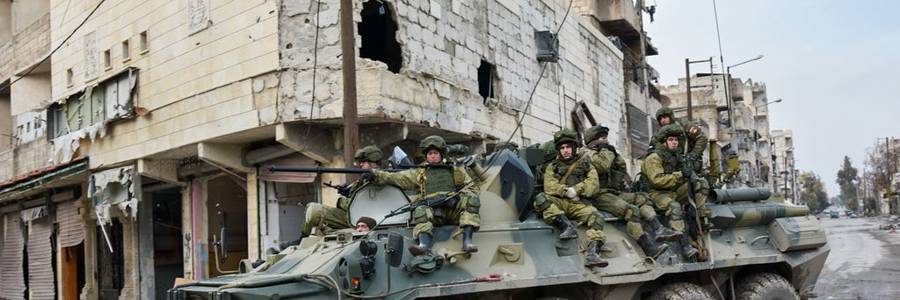
In the past weeks, the Syrian transitional government has taken control over areas in northeastern Syria where the Syrian Kurds have had autonomy for over for a decade. The United States with whom the Syrian Kurds collaborated on the ground against ISIS in 2015 has switched allegiances and now supports President al-Sharaa in his consolidation of power. This move is welcomed by Turkey, which wields decisive external influence over developments in Syria as a neighbour with its own security agenda focused on weakening Kurdish autonomy.
These political developments come on the background of tensions that have been building between the Syrian transitional government and the Kurds since the ouster of Assad by al-Sharaa (then al-Jolani), Hayat Tahrir al Sham (HTS), and a coalition of rebel factions making up the Syrian National Army (SNA) as well as other opposition groups.
But the question of governance – unitary or federal – is not solely a Kurdish issue ominously threating the future stability of the Syrian state. It is closely tied to how Syria’s other minorities – including Druze, and Alawites – would be integrated into the new state and the rights they would be afforded. While the past week’s offensive is touted as a victory for the al-Sharaa government in its efforts to consolidate power, it may be a short-term gain that leads to long term instability. The SDF is a deeply ideological, well-organised and battle-hardy force who has been able to rule over diverse ethnicities in the northeast through conversion, co-option, negotiation, as well as – but not only due to – repression. Throughout the Syrian civil war, they have been able to provide some stability and services to populations living in these areas. They have also held control over valuable agricultural and oil resources in the areas they governed and will need reassurances without which the al-Sharaa regime may face Kurdish insurgencies in critical resource rich areas.
The question of trust is inevitably also tied to the conduct of the Syrian armed forces under al-Sharaa’s command. As is often cited, the Weberian understanding of the state rests on its monopoly over the use of legitimate force within its territory. In an effort to prevent further violations of human rights under a new regime, integration of military forces into the army requires a proper human rights vetting process. This did not occur, as pointed out by the UN as late as December 2025. A month after the fall of the Assad regime, the SNA – at the behest of Turkey, its external sponsor through the conflict – was integrated into the new Syrian army with some of its commanders placed in important positions despite evidence of past war crimes.
This augments the sense of insecurity that many minorities face in Syria today, including the Kurds. The lack of trust in the al-Sharaa government has been a major factor in the unwillingness of the SDF to integrate its forces fully in the Syrian army despite the signing of a military integration agreement on 10 March 2025. In fact, the agreement was signed despite attacks earlier in March on Alawites in the coastal regions. The deadline for implementation of the agreement was the end of 2025. However, the March coastal attacks when coupled with the July 2025 atrocities against Druze and Bedouin communities in southern Sweida, proved instructive for the Kurds. They insisted on integrating into the Syrian armed forces as separate units rather than integrating individually in order to maintain the cohesion of their forces. At the same time, they were willing to negotiate with the transitional government in an effort to preserve Kurdish gains. As an example, the SDF and the transitional government agreed in April 2025 to a phased military withdrawal of SDF fighters from Kurdish majority neighbourhoods of Aleppo, relocating them east of the Euphrates River. The Aleppo agreement was heralded as a positive step in the dialogue between the two sides. Despite this, clashes broke out on the Kurdish-majority neighbourhoods of Sheikh Maqsoud and Ashrafiyeh in Aleppo on the 6 January as the Syrian army sought to take over these areas.
What has been most surprising to outside observers is the speed with which the SDF areas in the northeast were defeated by al-Sharaa’s forces and how fast allegiances to the SDF crumbled. Led primarily by Syrian Kurds in its early stages, the SDF’s military cadres consisted of the People’s/Women’s Protection Units (YPG/YPJ), ideologically committed to a secular and confederal Syria following the teachings of PKK (Kurdistan Workers' Party) leader Abdullah Öcalan (in prison in Turkey). However, particularly following the battle of Raqqa in 2015 and the defeat of ISIS, the SDF were able to expand their recruitment to a diverse group of fighters including Arabs, Turkmen, Yezidis, Christians and Assyrians. By 2019, according to some estimates, less than half of the SDF were ethnic Kurds. Furthermore, the areas east of the Euphrates that were governed by the SDF, particularly around the agricultural breadbasket of Deir ez-Zor and Raqqa are areas whose Arab ethnic make-up and tribal governance structures resisted the ideological nature of SDF rule making it easier for them to switch allegiances in support of the recent Syrian army offensive.
One of the elements of SDF rule in northeastern Syria was its strong ideologically grounded feminist politics. The women of the YPJ who fought against ISIS in 2014 are perhaps those who will suffer the US betrayal the most. They have little incentive to reintegrate into Syrian society to resume traditional roles and are likely to face social stigma. Based on reintegration of female combatants in other conflict contexts, this will be both complex and critical. These former fighters are also those most likely to face violence at the hands of rogue elements in the new Syrian army.
In an effort to placate Syria’s Kurds, al-Sharaa has issued a decree that formally recognizes Kurdish as a national language, allows it to be taught in schools, and restores citizenship rights to all Syrian Kurds. These are rights they did not have under the Assad regime. While this may be symbolically important for the Kurds, it raises the expectations of other minorities for representation. Not least, on the background of the Kurds’ present losses, it may not have the intended impact of placating their losses.
Syria is balancing on a knife’s edge, and the question of how the country’s minorities are treated is a key piece of the puzzle. Al-Sharaa must consolidate his power in ways that increase his legitimacy and build trust within a fragmented society. At the same time, he must accommodate powerful external actors — Turkey, Israel, and the United States—who have the ability to destabilize the new state if they act without regard for the delicate balances of power. Added to this are violent internal factions who have backed al-Sharaa’s rise to power and whose actions can weaken the legitimacy of his rule. A month-long ceasefire is now in place to stabilise the situation so that ISIS prisoners that were under the SDF’s control can be secured by the US forces. It will also provide a necessary pause for diplomacy to gain ground.
- Pinar Tank is a Senior Researcher at PRIO
Related comments

Posted by
All tags